

There’s no doubting that Greece is a country with a very rich history. From the Bronze Age to the Romans, the Byzantines to the Ottomons, Greece is a history-lovers paradise. There’s the Acropolis of Athens, the Minoan Palace of Knossos, the Ancient Delphi, and so many more remarkable historical landmarks that you won’t want to miss!
However, with over 200 inhabited islands on offer, choosing which Greek island is the best for history can be quite a challenge. To help you out, we’ve compiled a list of what we think are the best of the best when it comes to Greek islands that can satisfy your craving for history.
Which Greek Islands Have the Most History?
Paros
Having been inhabited since 3,200 BC, over 5,000 years ago, first up on our list of the best islands in Greece for history buffs is Paros. During ancient times, Paros was renowned across the Mediterranean for its high-quality semi-transparent marble, uses of which can be found at the Temple of Zeus at Olympia, the Hermes of Praxiteles, the Venus de Milo, and many others.
Today, Paros stands out from the deep blue of the Aegean thanks to its whitewashed houses and blue-domed chapels. Visitors can wander through the labyrinthine-like streets and find a piece of history at every corner. A must-visit for history-lovers in Paros are the Ancient Marble Quarries, located in the village of Marathi, as well as the Ancient Cemetery of Paros, which is considered to be one of the most important ancient cemeteries of the Cyclades.
Some more historic sites to discover in Paros include:
- The Archeological Sites of Tris Eklisies – a complex of Byzantine churches, under which lies the remnants of an early Christian basilica of the 6th century AD.
- The Mycenaean Acropolis of Paros – one of the most important archeological sites of Paros, believed to have been constructed in the 13th century and later destroyed by an earthquake.
- The Hellenistic Mosaics – dating from the 3rd century BC, the mosaics depict a central lozenge framed from bands and a running dog pattern.

Crete
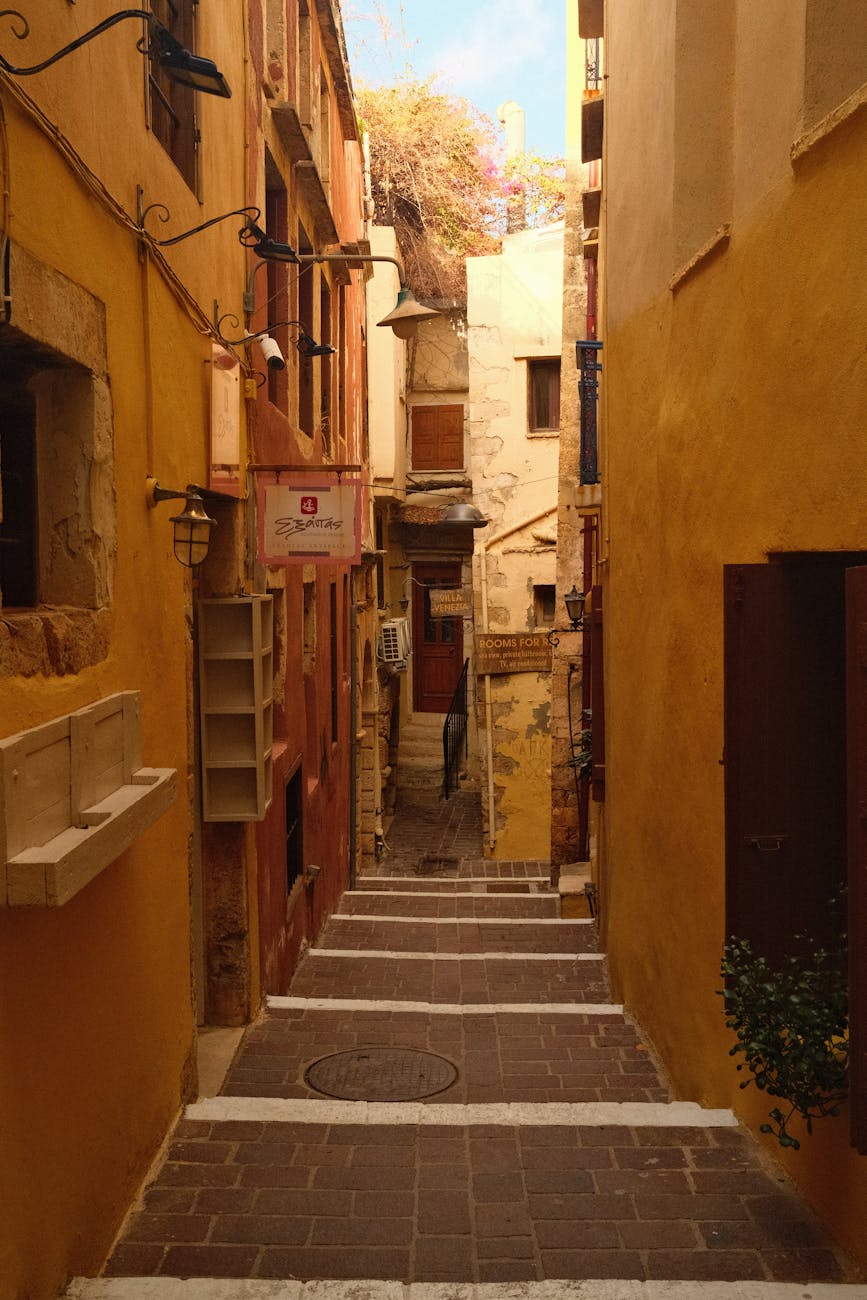
As the largest of the Greek islands and the fifth largest in the Mediterranean, Crete flourishes, past and present, for its role in the maritime trade networks of the Mediterranean. Between 1900 BC and 1450 BC, during the Late Bronze Age, Crete was a dominant cultural force in the Aegean region. This was the period when the Minoan civilisation took hold, being known for its great cities and palaces, as well as its extended trade networks and use of writing.
Today, Crete remains one of the best Greek islands for history buffs to visit, being home to multiple ancient cities. In particular, the capital city of Crete, Heraklion, provides the perfect base from which to explore the island’s many historic artefacts, situated near to the major archeological sites of Knossos Palace and Phaestos Palace.
Some of the best historical landmarks to see in Crete include:
- Minoan Palace of Knossos – the largest and most famous Minoan site, discovered in the early 20th century by the British archeologist Sir Arthur Evans.
- Phaestos Minoan Palace – the second most important Minoan site on the island, enclosed by Mount Ida and the mountain ranges of Asterousia and Dicte.
- Koules Fortress – the symbol of Heraklion Town, the fortress stands at the entrance of the port and serves as a centrepiece for the Venetian harbour.
- The Archeological Museum of Heraklion – boasts one of the richest collections in the world, housing findings exclusively from the most important Minoan centres.

Mykonos
Often thought of as a ‘party island’, Mykonos might be one of the more surprising historic Greek islands on the list. And while it is a great destination for partygoers, the island features a full range of culturally and historically important monuments and heritage sites. From white-washed, age-old churches to historical museums, this Cycladic island offers the best of both worlds. In fact, according to classical mythology, the Giants slain by Hercules are buried on the island under imposing blocks of Mykonian granite.
The history of Mykonos spans across more than 3,000 years, beginning at the Late Bronze Age and flourishing in the 1950s with an influx of tourists. In the early 1930s, many wealthy tourists from the US and Europe, began vacationing on the island, being drawn by its lively and unique atmosphere. Later, in the 1960s, it was the hippies’ turn to take advantage of Mykonos’ laid-back, bare-feet vibe.
Some of the best historical sites in Mykonos include:
- Paraportiani Orthodox Church – located in the neighbourhood of Kastro, work on this small white-washed church was initiated in 1425 and finally completed in the 17th century. It has become one of the most photographed sites in Mykonos.
- Little Venice – one of the most picturesque settings on the island, Little Venice comprises rows of medieval two- and three-storey houses along the waterfront, once the properties of rich local merchants or captains.
- Archeological Museum of Mykonos – one of the oldest museums in Greece, the museum consists of six rooms containing findings from important excavations in Mykonos history.
- Armenistis Lighthouse – built in 1891, this 19-metre lighthouse was built to stand as a guide for incoming ships following the sinking of British steamship Volta in 1887.


Santorini
Having survived volcanic eruptions, several pirate invasions, and many colonisations, Santorini is certainly one of the best islands in Greece for history buffs. Excavations have uncovered the existence of an ancient Minoan colony in the southern part of the island, known as the Akrotiri, which was relatively advanced, demonstrating intricate frescoes, wall ornaments, pottery, and even paved streets complete with an elaborate drainage system and complexes of multi-storey buildings.
However, around 1600 BC, there was a cataclysmic volcanic eruption which led to the destruction of the island and the Akrotiri civilisation as it was. The centre of the island sunk, giving it its characteristic half-moon shape today, and the residents that survived the ensuing tsunamis likely migrated to nearby islands. In 1204 AD, Santorini was taken over by the Venetians, who helped to rebuild it using advanced methods from the western world. However, there was another earthquake and volcanic eruption in 1956, causing 85% of the island’s infrastructure to be wiped out, and the majority of locals to, once again, abandon the island. It wasn’t until the 1970s that the tourist industry began to truly flourish.
Some of the best historic sites to see in Santorini include:
- Akrotiri – one of the most important Aegean settlements of the early Bronze Age, deserted following the 1600 BC volcanic eruption. Covered in volcanic material, its evidence was preserved, including multi-storey houses, exquisite frescoes, stone streets, an advanced sewer system, and a vast range of vases and furniture.
- Thera – founded by Dorian colonists, this ancient town spreads out in terraces and boasts must-visit landmarks like the Sanctuary of Artemis, the Agora, the Temple of Apollo Karneios, the Terrace of Festivals and more.
- Oia – the first settlement to have been designated as a cultural heritage site, Oia is a pretty village embedded in the pumice of the cliffs. This is also the best spot on the island for views of the magnificent sunset.


Corfu
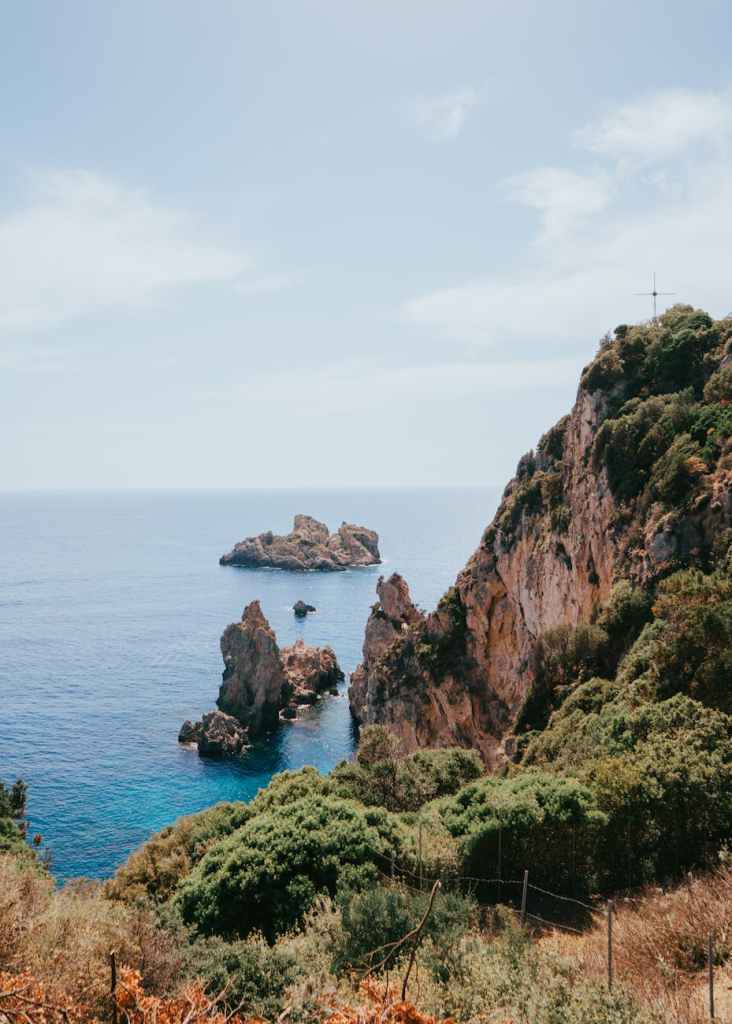
Dating back to over 3,000 years ago, to the 8th century BC, and having been the target of numerous raids and attacks, Corfu is a must-visit Greek island for history fanatics. Originally named Korkyra, after the daughter of the river god Esopus, Corfu was first occupied by the Eretrians and later became an important naval base and trade centre for the Corinthians.
In coming years, the island would be ruled by the Roman Empire, the Normans, the Venetians, and eventually the British following the defeat of Napoleon in 1814. During this time, the British built roads, a new water supply system, and constructed many important buildings such as the Palace of St. Michael and the Palace of St. Georges. Finally, in 1864, Corfu became part of Greece. Today, Corfu has become one of the most popular holiday destinations in the country, regarded for its cosmopolitan old town, stunning scenery, and spectacular sandy beaches.
Some of the best historic things to see and do in Corfu include:
- Corfu Old Town – a UNESCO world heritage site, the Old Town boast some of the island’s most important historic landmarks, including the likes of the Palace of St. Michael and St. George, the Reading Society, the Catholic Cathedral, the Ionian Parliament, and many more.
- Corfu Old Fortress – built by the Venetians during the 13th century on the eastern side of the peninsula, the fortress incldes the Porta Sopranza, the British barracks, the Tower of the Sea, and the Tower of the Land.
- Spianada Square – the most impressive square in Corfu Town and the largest in Greece, Spianada lies between the Old Fortress and the Old Town.

Naxos
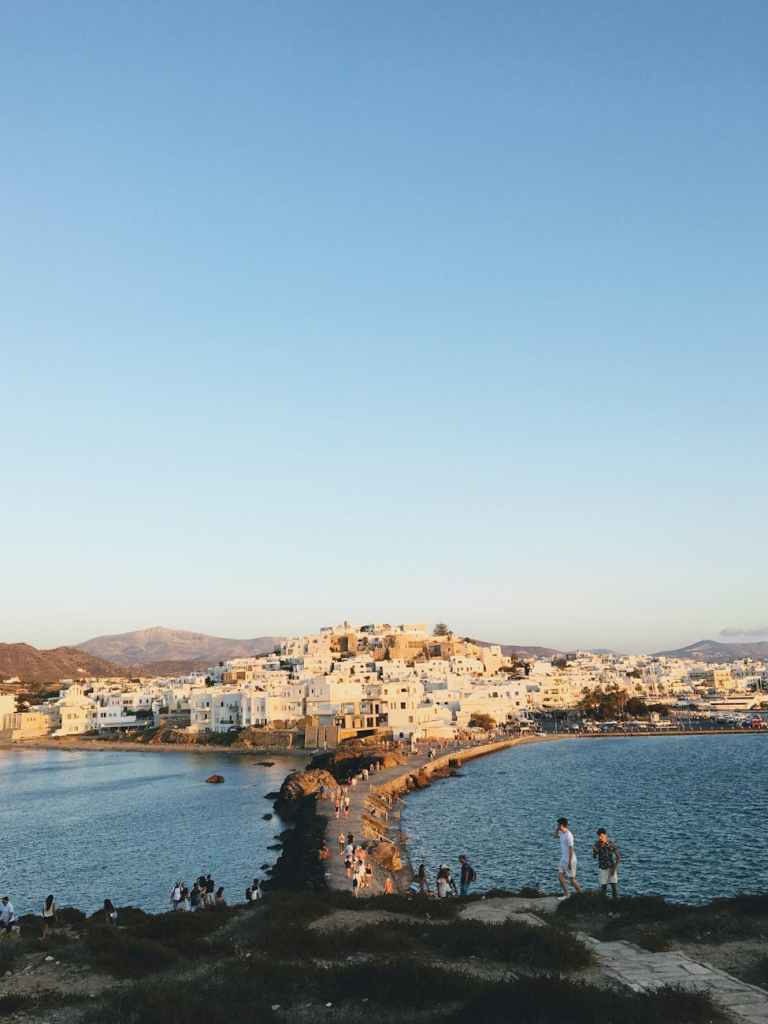
According to classical mythology, Zeus, the king of Olympian gods, grew up on the island of Naxos. So, it’s not surprising that this is one of the best Greek islands for history. Once one of the most important centres of civilisation in all of the Cyclades, Naxos was first inhabited by the Thracians. The island’s residents worshipped Zeus, and erected a temple in his honour on Mount Zas. Over the years, Naxos has been ruled by the Romans, the Venetians, and the Turkish Ottoman Empire.
In 1821, Naxos joined the Greek struggle for independence from the Ottoman Empire. Today, the island is one of the most popular and well-loved for feeling more authentic than some of the other larger Greek destinations. With sandy beaches and pretty cobbled streets lined with traditional, family-run tavernas, though, Naxos isn’t just for the history enthusiasts. In fact, it’s also so much more than just a holiday hotspot, being home to its very own productive wine and olive oil industry.
Some of the best historic things to see and do in Naxos include:
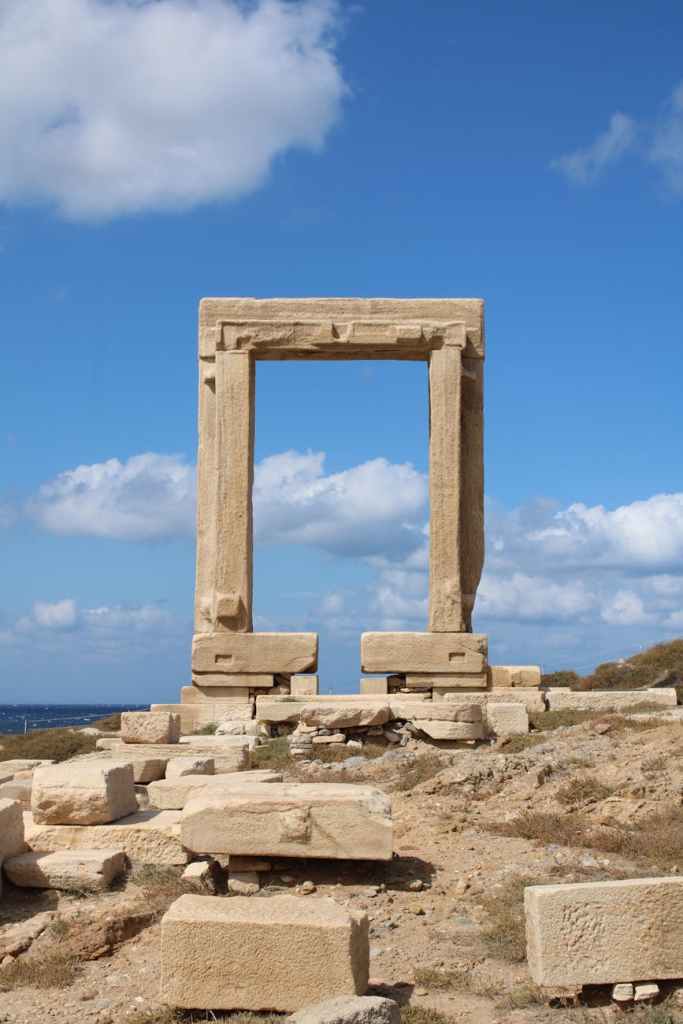
- Portara – once the doorway of a huge temple dedicated to Apollo, Portara has become the trademark of the island as the first thing visitors see when approaching by boat.
- Kastro – arguably the most picturesque quarter of the island, Kastro (Castle) became the main town when the Naxos was under Venetian rule.
- Temple of Demeter – an ancient temple dedicated to Demeter, the goddess of agriculture, dating back to the 6th century BC.
- Agios Sozon Chapel – a whitewashed chapel built upon a steep rock with spectacular views across the turquoise Med.
Skopelos
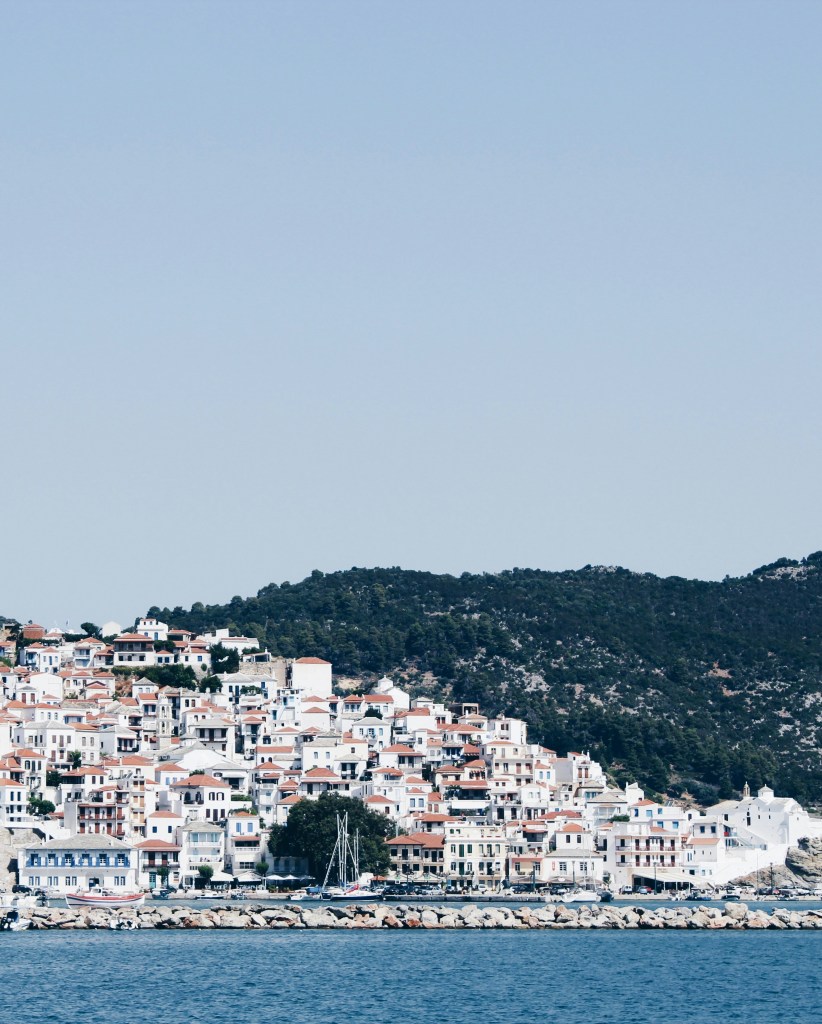
Another historic Greek island that hasn’t (miraculously) been taken over by hoards of tourists yet is Skopelos. Not just a dreamy spot for a holiday, this island is rich in history and cultural heritage, stretching back more than 18 centuries when it was first inhabited in the Paleolithic age. To name just a few, Skopelos is famed for its aphrodisiac wines, being home to Olympic champions, and being taken over by pirates.
With plenty to see and do for history buffs, Skopelos is a must-visit in the present day. Discerning travellers should be warned, however, that the island’s historic sites are not quite as easy to get to as some of the other destinations on this list. They tend to be spread out across the islands, with many requiring some trekking to be reached. You can, however, combine seeing some of the best historic sites with some very scenic walks.
Some of the must-see historic landmarks on Skopelos include:
- Church of Agios Ioannis Kastri – this is the church where scenes of the Mamma Mia movie were filmed, including the wedding, standing on top of a rock with spectacular views across the island and sea.
- Monastery of Timios – dating back to the 17th century, this monastery hosts a small museum, holy icons, ecclesiastical relics, and old public newspapers.
- Monastery of Evangelistria – located on the slopes of the mountainside, this monastery was constructed in 1712 and is surrounded by lush greenery.

Zakynthos
Last but not least, Zakynthos rounds up our list of the best Greek islands for history buffs. Known as the Flower of the East by the Venetians, Zakynthos was first inhabited during the Neolithic times. According to mythology and the writings of Homer, Zaynthos was named after the grandson of Zeus and the son of Dardanus who founded Troy. Since its founding, the islands have been ruled by Macedonia, the Romans, the Turks, the French, and the Russians.
While many visitors come to Zakynthos to see the Shipwreck (Navagio) beach (or to party), many other historical landmarks make it worthwhile a visit. From the Venetian Fort at Bohali and the Romas Mansion in Zante Town to the Museum of Art and the Monastery of St Denis, there is more than enough to keep you busy.
Some of the best things to see for history buffs in Zakynthos include:
- Romas Mansion – this historic house was built in the 17th century by the English Vice consul and was later used as the English Governer’s Residence and centre of government.
- Monastery of St Denis – the best-known monastery on the island – St Denis is the patron saint of the island and was born to a wealthy family here in 1546.
- The Venetian Fort at Bohali – located on top of a hill, this castle dates back to the 15th century. It was destroyed by the Turks in 1460, but later restored with the help of the Venetians.


That concludes our pick of the best islands in Greece for history buffs. From Crete and Corfu to Naxos and Zakynthos, there are plenty of historic Greek islands to choose from.
 Techno-Mads
3 thoughts on “8 Best Greek Islands for History Buffs”